ESG Trends and Their Impact on the Chemical Industry
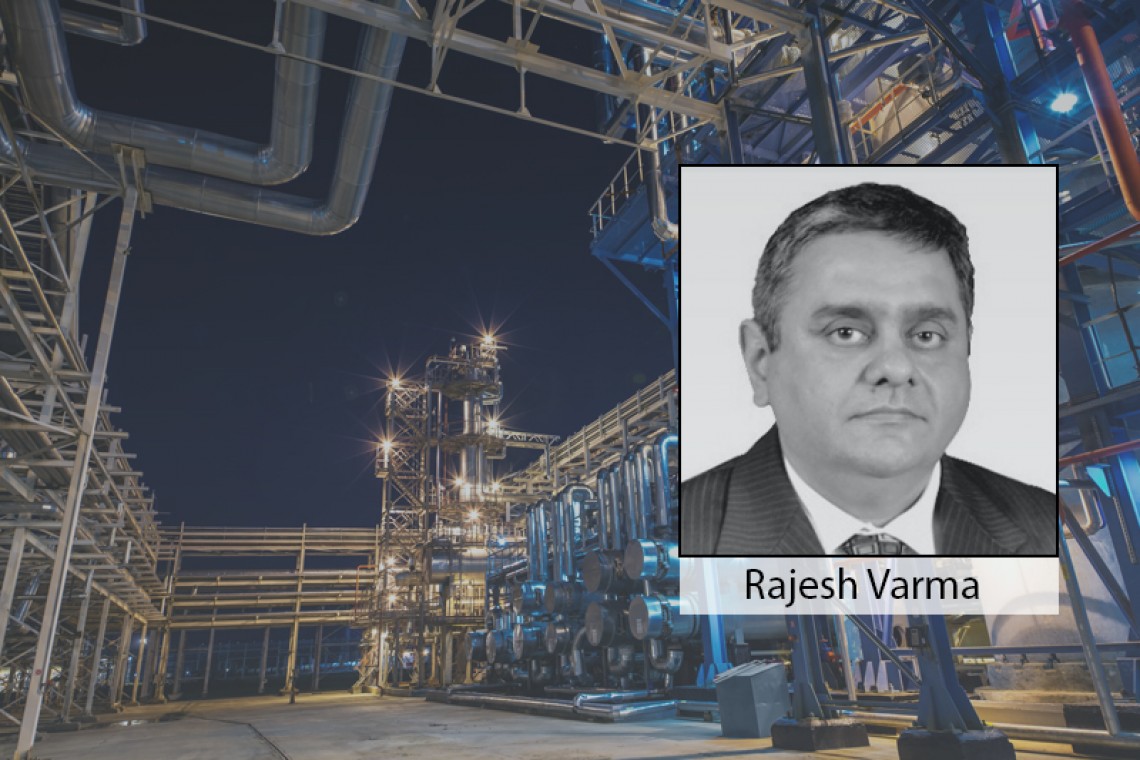
Rajesh Varma (CDI Global India): Today I have with me Mr. CG Sethuram, a Chemical Engineer from REC and alumnus of the prestigious Indian Institute of Management, Ahmedabad. Sethu, as he is affectionately called, has worn several hats in his 40+ years in the Chemicals sector. He has held senior positions with several groups in India and worked on joint ventures with Hoechst AG of Germany (Polyolefins Industries), Atochem of France (Peroxides India), Dragaco in Germany (Sanmar Group), and Chemetecno SRL, Italy (Sanmar Group) during his illustrious career. He is presently the Group CEO of Thirumalai Chemicals Limited, which has operations in India, Malaysia, The Netherlands, and the USA (Future)
Thank you, Sethu, for sparing some time for this interview. Given the context of the increasing importance of Environment, Social, and Governance (ESG) practices in the Chemicals sector, I wish to take your point of view on certain ESG trends and their impact on the profitability and reputation of Chemical companies.
Sethu: Rajesh, thank you for this request. First, a standard disclaimer. All opinions and statements are mine, learned over many years of my experience, and do not reflect those of any individual or any organization. Any similarities are purely coincidental.
I will be happy to share my thoughts on any specific questions you may have on ESG in the Chemical sector as I know them.
Rajesh: My first question is that while ESG norms are very important for sustainable and fair business practices, there is also an increased cost incurred for retrofitting equipment, bringing in diversity, and other social measures. While it is believed that these additional capex and opex costs will help improve Return on Capital and other financial metrics, do the facts on the ground support this view?
Sethu: In my opinion, these do not require any significant additional capex. The practices that are supposed to be followed already under different guidelines have to be regrouped to address compliance. For example, most chemical and specialty chemical companies already follow systems and practices to reduce waste, minimize energy consumption, minimize water consumption, operate as ZLD (Zero Liquid Discharge) outfits, minimize emissions on the E (Environment) side. These need to be regrouped and reclassified under the new code of practice and continuously monitored for compliance and continuous improvement. On the S (Safety) side whereas most companies manage their employees, suppliers, and customers well, the communities they operate in need to be engaged a lot better for a sustained harmonious supportive relation. This is challenging as the communities change with their political, leadership, and administrative systems over some specified periods, and thus a need arises every time in ensuring complete dissemination of information in a transparent manner to a new group and new system. The communities also feel proud of the organization in the area and when this happens the harmonious balance lives on. On the G (Governance) side, sufficient norms exist in India for all listed companies, and significant checks and balances are followed by the regulators. It is for the non-listed companies that we have to ensure the G factor as done for the others. Here again, many companies have started incorporating the new codes for the board and its directors, the management, internal financial controls, compliance controls, and the business risk management controls and mitigation.
Rajesh: How should one establish a structured process to manage the ESG engagement between the company, its employees, local communities, and other stakeholders? How different would this be from SHE practices which have been in vogue for decades?
Sethu: It is not going to be significantly different as one needs to regroup them into the new norms. There will be a few additional parameters that one needs to comply with and set systems for such compliance. For example, how do you continuously measure and reduce the carbon footprint? How will you ensure diversity in a manufacturing operation ensuring adequate safety? How will you keep the employee vibrancy quotient at a happy level? How will you keep records of experience that are easily retrievable? These will require technology tools and focused implementation. These are not likely to involve significant capital expenditure but will involve committed time and effort for implementation and continuous practice. They are like various quality and productivity certifications that we have now and did not exist 50 years back.
The stakeholders including all investors and consumers are driving the changes for compliance with the objective of ensuring a transparent continuous improving corporate for sustained business growth with the least damage to nature or humanity. This really is the initiative. It did exist earlier but is taking a different focus now.
Rajesh: Yes, you are right about the increased investor and consumer pressure which drives these changes. In fact, we have the Private Equity funds prioritizing investments based on ESG ratings of companies and have consumers increasingly demanding chemical-free, organic, and natural ingredient-based products. While most companies will strive to achieve this, there will be several other segments where this may not be feasible in the Chemicals sector. What would you recommend for such companies?
Sethu: Let us clearly understand the demand requirements from consumers. No doubt every consumer wants “Natural” ingredients. This means that they are derived from nature and can be replenished by nature. If they are not, then they are “Nature” affecting or depleting. ESG is only to ensure compliance of minimal or no damage to the environment including the living beings. So the research is to mimic “nature” in all chemical and specialty chemical manufacturing and over the period these will gain substantial importance as they will automatically score favorably on ESG. Regarding PE firms investing, I may take the liberty to suggest that evaluations have to be done not only on all financial metrics of growth like FCF, ROCE, EVA, Scalability, DCF but also on some other parameters pertaining to ESG.
Recently I heard a professional answering a question as to how to evaluate the performance or value of an organization or an Industrial group - in the short term or long term. He responded with the metrics that resemble various facets of ESG. Let me list some of them:
- The eagerness of new employees to join the company
- The eagerness of vendors and customers to be with them
- Value and popularity of the Logo or Brand of the company
- Their products and service to be the benchmark in the industry
- Customers, Government, Employees, Vendors - blindly depending on the documents provided by the company valuing the truthfulness and authenticity of the documents
- Financial institutions queuing up to give loans
- Good name due to CSR in the surrounding area
- Literally meeting all environmental norms and improving year after year
- NGO's refusal to file any wrongly framed cases against them
- Competitors eyeing and queueing to take over or acquire the company
These are some of the parameters he valued on a scale of 0-10 with 0 being very bad and 10 being ideal. In his opinion, the rest of the things like profit, expansion, market cap, share value, and various financial ratios are all the result of all these points.
Rajesh: Given that ESG norms are here to stay and there are metrics or ratings on which ESG performance is gauged, how reliable would these be and what do you think should be the responsibility of the Board of Directors that these performance metric have their oversight and concurrence? Would you like to offer some guidance on the Key Performance Indicators for ESG monitoring?
Sethu: The rating agency CRISIL in India has developed a good rating metric on ESG covering certain initial parameters
These are:
E: EHG emissions. energy use, waste, and pollution, water use, land use
S: Workforce and diversity, occupation and product safety, customer and vendor engagement, ease of access and reach, communities and society
G: Board performance and governance, ownership concentration, management track record, shareholder relations, disclosure practices, and statements
In my opinion, these can be good metrics for any corporation to start with for continuous monitoring. Obviously, every corporation should assess itself and keep improving the score. Over a period of time, new metrics will also get added specifically to chemicals and specialty chemicals.
In every monthly, quarterly, annual board meeting, in addition to the Business Responsibility report and the Business reviews, ESG review will soon become a part of a review mechanism. It is already happening.
Rajesh: Thank you, Sethu, for offering your perspective on ESG and its attendant opportunities and challenges. Clearly, ESG is an important metric, on the basis of which companies will be measured and compared. As you rightly pointed out, good ESG practices will help companies focus more on sustainability, leading to greater trust in the community, attract and retain employees, help lower costs, and ensure better regulatory and statutory compliances. Best wishes.
Rajesh Varma, CDI Global India
Author:
Managing Director
Published:
10th August 2021
Format:
Subject:
Industry:
Share:


