AI Software Business: To acquire or not to acquire?
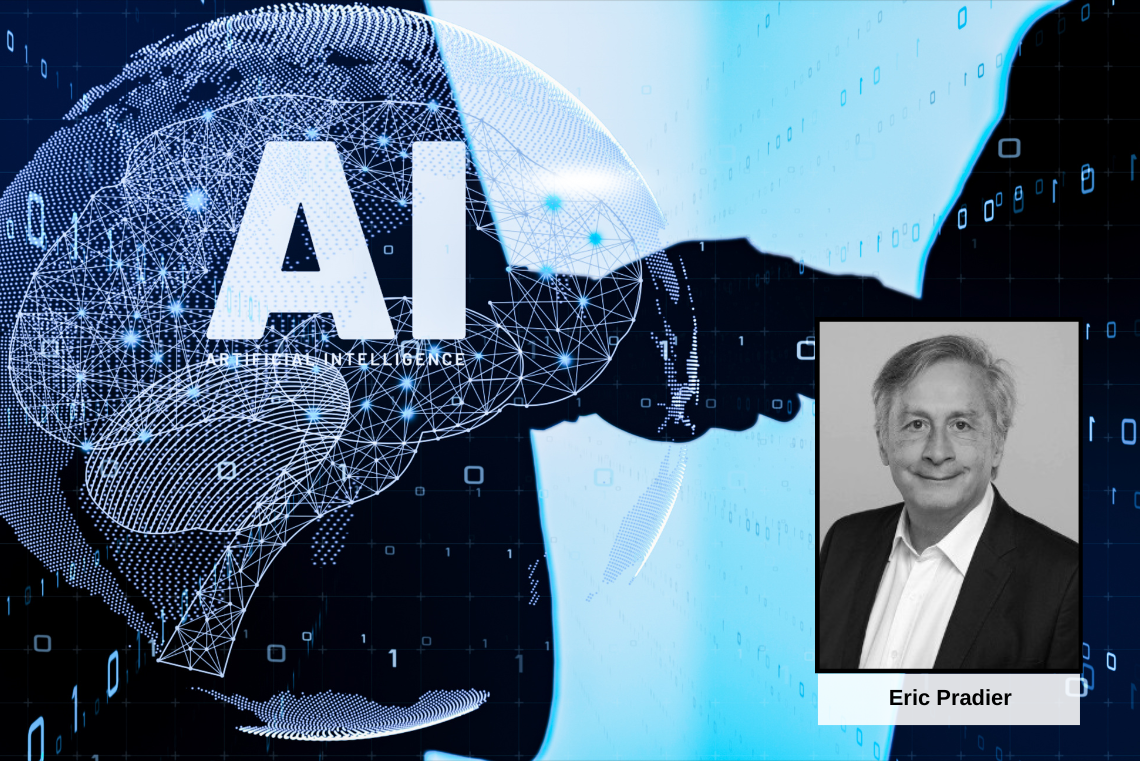
OpenAI recently closed a new fundraising of 8.3 B$ (valuating the company at 300 B$). At the same time Tim Cook, Apple Inc., CEO, confirmed that they were actively looking for significant AI business acquisitions to catch up in that critical domain.
This highlights two key drivers of AI business investment strategies at the moment:
- An unleashed appetite of AI native entrepreneurs to invest in AI software tools and infrastructure
We are talking here about close to religious attitudes that are promoted by a couple of very high-profile gurus
- A more cautious attitude of Digital Giants watching and navigating
between -relevant, -necessary or - potentially too late steps in
We are talking here about experienced and successful businesses used to leverage new technologies at the right time in order to transform behaviors rather than to push a new world, open to innovative and disruptive competitors
What and when to do then?
Some recent advisory services engagements have led us to address the following question from our clients specialized in software: “I am confused about AI and I would like you to assess what it would bring my current business both in terms of short-term opportunities and short-term threats”.
In all cases we started from three current and consensual statements about AI global impact to assess how they would affect customer business and if any investment move was to be recommended.
- AI enables a quantum leap in enterprise efficiency (do more and better with less)
It impacts businesses that are focused on bringing positive and competitive transformation within enterprises and especially the software market, as we can see through 3 different cases:
- Software vendors aiming at displacing large and standard ERPs (e.g. low code, no code solutions)
Most of them are not AI native players and are often lagging in terms of user interface and user help to renew enterprise processes. Taking an AI step to address at least those two weaknesses is a Must to survive and to go on differentiating with solutions for businesspeople and not for IT specialists. It looks urgent for those players to acquire small and recent consulting firms specializing in the use of AI tools for improving daily life of enterprise professionals.
- Vertical software vendors
Marketplace shows coexistence of solid and resilient “non AI players” with deep narrow and innovative new “AI native players”. A permanent monitoring of market shares evolution and “displacement attacks” on existing customer base should allow “old timers” to acquire AI native competitors at the right time and for the right price.
- Established ERPs vendors
Market patterns here look very similar to what happened several years ago with digital transformation and IT infrastructure revolution. Large ERP vendors, taking advantage of the seemingly endless resilience of their solutions first added some refashioned user interface to their unchanged ERP engines and could later enable large migrations towards hybrid platform architectures made of the winning solutions of IT digital evolution (e.g. cloud services vendors).
In those three cases, we are talking about closing a gap and therefore choosing between organic and external growth.
Regarding potential acquisitions, any evaluation will have to combine a financial calculation (enterprise value of the targeted acquisition) with a business-driven comparison of organic vs external options AND a thorough assessment of the following question “Can I acquire AI culture thru training and hiring skills or should I bring in an AI-native culture developed inside a third party company while mitigating value destruction risks ?”
- AI triggers astute innovation that will significantly impact usages at work and in personal life
That compares to what happens with digital innovation combining explosion of data acquisition, data computing and networks capabilities.
Start-ups launched by AI native entrepreneurs can be interesting targets to invest in.
Market is still emerging and the highly collaborative way of working of AI developers’ community will prevent sudden breakthroughs or killing applications.
Let’s also remember that AI opens new horizons but does generate lot of fear.
At this stage, software aggregators focused on innovative solutions are the most relevant acquirers and need to target the verticals they are strong in or want to reinforce in their portfolio. Priority has to be on professional innovative applications, bringing immediate and consensual improvement to most of the population (e.g., healthcare applications, decarbonization management).
Regarding personal life AI usages, focus is today on AI generative tools and new applications will take longer to emerge as enabling AI supposes huge computing resources that today can only be highly centralized (whereas digital innovative applications did leverage a lot of data computing at any level of the network infrastructure and therefore impacted very quickly personal life of connected people).
Let us then wait and see here!
- AI is The way to transhumanism
This stands today as a belief and a potential hobby for investors with deep pockets and limited concern for ROCE. Rational advisory is therefore not so easy here; let us maybe just suggest that visionaries that could make human life longer and in good shape will certainly attract lot of money.
Let us now conclude this analytical overview and set of recommendations, with a simple and global advice:
- AI is here and opens up a revolutionary technological era. Any enterprise must wonder about what it means for its short-term and longer-term strategy.
- It is critical for an enterprise to find the right balance between moving too early or lagging too long.
A thorough business assessment is an absolute must before any decision or planning.
CDI Global has many years of experience in transactions in the Technology, Media and Telecommunications industries. We understand technologies and markets, and our local presence in more than 30 countries, paired with M&A and cross-border expertise, makes us an ideal partner for discovering and executing on TMT transactional opportunities.
By: Eric Pradier, CDI Global TMT Industry Group leader
Author:
Managing Partner
Published:
23rd September 2025
Format:
Subject:
Industry:
Share:


