A high-beam market outlook for automotive exterior lighting
There is little doubt among experts that automotive exterior lighting is entering a decade where it will evolve from a predominantly safety-oriented component into a strategic interface for style, branding and communication between vehicles and their environment. Over the next 5–10 years, the segment should significantly outgrow overall light-vehicle production, supported by technology innovation and industry consolidation, while remaining largely independent from the shift to electric powertrains. An appealing perspective!
From safety device to emotional signature
For most of the 20th century, the value of exterior lighting was defined almost entirely by its safety contribution: seeing and being seen. Regulations specified minimum photometric performance, but styling freedom was limited and lamps were rarely a core element of brand identity.
Today, lighting is one of the first elements designers use to differentiate a car, especially through front and rear signatures visible from long distance. OEMs now invest heavily to create unique daytime running light motifs, animated welcome sequences and rear light graphics that are as recognizable as the grille or logo, particularly in premium and new EV line‑ups.
From standardized lamps to bespoke designs
Not so long ago, many cars shared almost identical headlamps sourced from a few suppliers, such as circular standardized units in Europe (e.g., Lucas 700) or the rectangular sealed‑beam systems that dominated the US market in the late 1970s and early 1980s due to regulatory constraints. These components enabled little styling differentiation; the same basic unit could be mounted on several brands with only minor bezel or trim changes.
The progressive liberalization of lighting regulations, followed by the arrival of halogen, xenon and then LED modules, unlocked much greater geometric freedom. As a result, we have moved from “one-size-fits-all” units towards highly customized optical systems, often co‑developed between OEM studios and Tier‑1 suppliers to match precise brand DNA, aerodynamic objectives and lighting performance.
Technology disruptions enabling safety and style
Constant innovation is what allows exterior lighting to serve both safety and emotional roles at the same time. Several technology waves are converging:
- LED and laser sources: High‑efficacy LEDs have become the dominant source in new vehicles, enabling compact optics, sharp light signatures and lower energy consumption than halogen or xenon. Laser high‑beam systems, although still premium and niche, offer very long-range illumination within small packages.
- Smart sensors and adaptive lighting: Camera and radar inputs drive adaptive driving beam (ADB) systems that can selectively shade out other road users while maintaining maximum illumination elsewhere, improving night-time safety without dazzling oncoming traffic. Over the next decade, these systems will migrate from premium to mid‑segment vehicles as hardware costs fall and software is amortized across vehicle platforms.
- OLED and display technologies: Rear lamps will increasingly integrate OLED panels providing homogeneous surfaces, fine-grained segmentation and animated functions. Future “display‑grade” rear signatures will vary patterns by trim level or market and support vehicle‑to‑everything (“V2X”) communication concepts.
- Computing power and software: Advanced control units now orchestrate dozens of LED pixels per lamp, enabling matrix beams, dynamic indicators and “lighting choreography” synchronized with locking, charging or driving modes. This creates new fields of differentiation (UX design, brand storytelling) that sit at the intersection of software, electronics and design.
In short, the same technology stack—sensors, light sources, software—that improves objective safety is also what enables expressive styling, making lighting one of the rare domains where regulation and emotional appeal are aligned.
Exterior lighting as communication interface
Looking ahead, automotive safety will expand beyond illuminating the road to include the active display of information outside the car. Several trends are emerging:
- External displays and light bars: Manufacturers are testing front and rear display zones that can present icons or messages such as automated driving status, pedestrian warnings or charging information. Regulations are still evolving, but limited standardized pictograms (e.g., emergency stop, convoy mode) are likely within a 5–10‑year horizon.
- Ground projection: High‑resolution headlamp projectors and dedicated modules can project symbols onto the road surface—crosswalks for pedestrians, trajectory hints when reversing with a trailer, or warnings of icy conditions detected by Advanced Driving Assistance Systems (ADAS) sensors. As autonomy features advance, communicating the vehicle’s intent visually to pedestrians and cyclists will become a core safety requirement.
- Inter‑vehicle dialogue: When combined with V2X connectivity, lighting patterns could coordinate behaviors such as lane‑merging or emergency corridors for ambulances. While true “dialogue” will be constrained by regulation and the need for universal understanding, standardized color, timing and pattern schemes are being studied in multiple markets.
These functions will not replace traditional lamps but will complement them, turning exterior lighting into a key element of the human–machine and machine–machine interface.
A powertrain‑agnostic, but EV‑amplified market penetration
A crucial characteristic of exterior lighting is that it is inherently powertrain‑agnostic: Basic requirements for visibility, signaling and styling are the same whether the vehicle is powered by an internal combustion engine or an electric motor.
This makes lighting one of the resilient business areas in the automotive industry: The same lighting architectures can be shared across multiple types of vehicles and powertrains, and suppliers can therefore amortize R&D and tooling over broader volumes, supporting investment in advanced features despite uncertain overall market growth and powertrain mix.
Electric vehicles however clearly act as “technology accelerators”:
- EV platforms often feature cleaner front fascias with reduced cooling needs, making continuous light bands and backlit logos easier to implement than on ICE-powered cars;
- OEMs use lighting to differentiate EV new or sub‑brands and justify higher pricing, accelerating the penetration of LED, OLED and intelligent features in these line‑ups first before cascading down to ICE vehicles.
Market outlook and consolidation dynamics
Despite “dull” volume outlook in many mature automotive markets, exterior lighting remains a growing segment in terms of value: Recent analyses estimated the global automotive lighting market at around USD 32–34 billion in 2023–2024, with projections of roughly USD 48–49 billion by 2030, implying a CAGR in the 4–6% range. Within this, LED lighting alone is forecast to reach about USD 37 billion by 2030 with growth above 7% annually from 2024.
This relative outperformance, combined with the strategic role of lighting in vehicle differentiation, has already triggered significant reshaping of the supplier landscape in recent years:
- OpMobility (formerly known as Plastic Omnium): The group has aggressively built an integrated exterior systems and lighting business. In 2022 it completed the acquisition of Varroc Lighting Systems (VLS) from Varroc Engineering, aiming to create a full end‑to‑end lighting value chain and unlock profitability improvements. OpMobility has also acquired automotive lighting assets from ams OSRAM, reinforcing its technological base and positioning in premium LED modules.
- Forvia (formerly known as Faurecia) and Hella: Faurecia’s acquisition of Hella, finalized early 2022 for an enterprise value of roughly EUR 5.3 billion, created Forvia, now among the world’s largest automotive suppliers. Hella’s strong positions in lighting and electronics are central to Forvia’s strategy, with lighting forming one of the group’s key business segments and a cornerstone of its roadmap.
At the same time, market share is fragmenting slightly: the combined share of the world’s top five headlamp manufacturers has fallen from about 65% in 2020 to around 60% in 2024, reflecting the rise of Chinese players and increased competition. This mix of consolidation at the top and new regional entrants at the bottom underscores both the attractiveness and the strategic complexity of the segment, also making it a focus area for M&A.
Beyond passenger cars: trucks, off‑highway and 2‑wheelers
The transformation of exterior lighting extends across all vehicle categories, not just passenger cars:
- Trucks and buses: Heavy‑duty vehicles increasingly adopt LED headlamps and signature light bars to improve visibility and brand recognition on highways, while integrating additional marker lights, cornering functions and adaptive beams for safety. As logistics operators focus on uptime and total cost of ownership, the durability and efficiency of solid‑state lighting provide clear economic benefits.
- Off‑highway and construction: Agricultural and construction machinery use high‑output work lamps and signaling systems, where LED and intelligent control improve performance in dust, vibration and harsh weather environments. Here, matrix work lights and zoned illumination can support semi‑autonomous functions, precise nighttime operations and unlock additional productivity contributions.
- Two‑wheelers and micro‑mobility: Motorcycles and scooters increasingly feature full‑LED headlamps, DRLs and dynamic indicators, both for safety and to project a modern identity. As urban micro‑mobility grows, regulatory pressure for better conspicuity of small vehicles is likely to push further innovation in compact, energy‑efficient lighting modules.
For suppliers with multi‑segment exposure, these adjacent markets may provide additional volume and diversification, supporting continued R&D in optics, electronics and software.
What comes next: technologies, players and AI
Looking 5 to 10 years ahead, several trajectories are plausible for automotive exterior lighting. Technologically, we can certainly expect further miniaturization of LEDs, wider use of OLED, and gradual deployment of higher‑resolution projection systems—possibly moving from tens to hundreds of thousands of controllable pixels per headlamp in high‑end applications. Standardized external signaling concepts for automated driving (icons, colors, projected symbols) are likely to emerge within major markets (e.g., USA or EU), turning lighting into a regulated communication protocol rather than a purely design‑driven element.
New entrants may enter and possibly disrupt the global market, such as Chinese Tier‑1s leveraging domestic EV growth and cost competitiveness to expand globally or players coming from adjacent domains (semiconductor and LED specialists, display manufacturers, software and UX design firms). At the same time, “traditional” lighting suppliers will need to orchestrate new skills and supply chain ecosystems that blend optics, electronics, software and connectivity, rather than relying only on mechanical and optical expertise.
Artificial Intelligence (AI) is poised to play a pivotal role across the value chain. In development, AI‑based design tools can bring extremely valuable productivity to the optimization of optical systems, simulation of glare and visibility under diverse conditions, and exploration of signature concepts within regulatory constraints. In operations, AI algorithms embedded in the vehicle could better interpret sensor data to adapt beams dynamically, predict component failures for predictive maintenance, and personalize lighting behavior to driver preferences and context.
All these forces point toward an exterior lighting industry that is more digital, more integrated with ADAS and connectivity, and more critical to both safety and brand identity than ever before. For businesses able to combine hardware excellence with software, data and AI capabilities, the next decade should offer substantial opportunities—even in a world of modest overall vehicle growth.
To many players in the automotive industry, this singular positive outlook may transform into strategic decisions: Adapting to those evolutions will mean acquiring, divesting or carving out parts of their business portfolio. We take pride at CDI Global in being able to offer them critical tailor-made support, thanks to our unique combination of deep industry expertise, worldwide presence and 50+ year cross-border M&A experience.
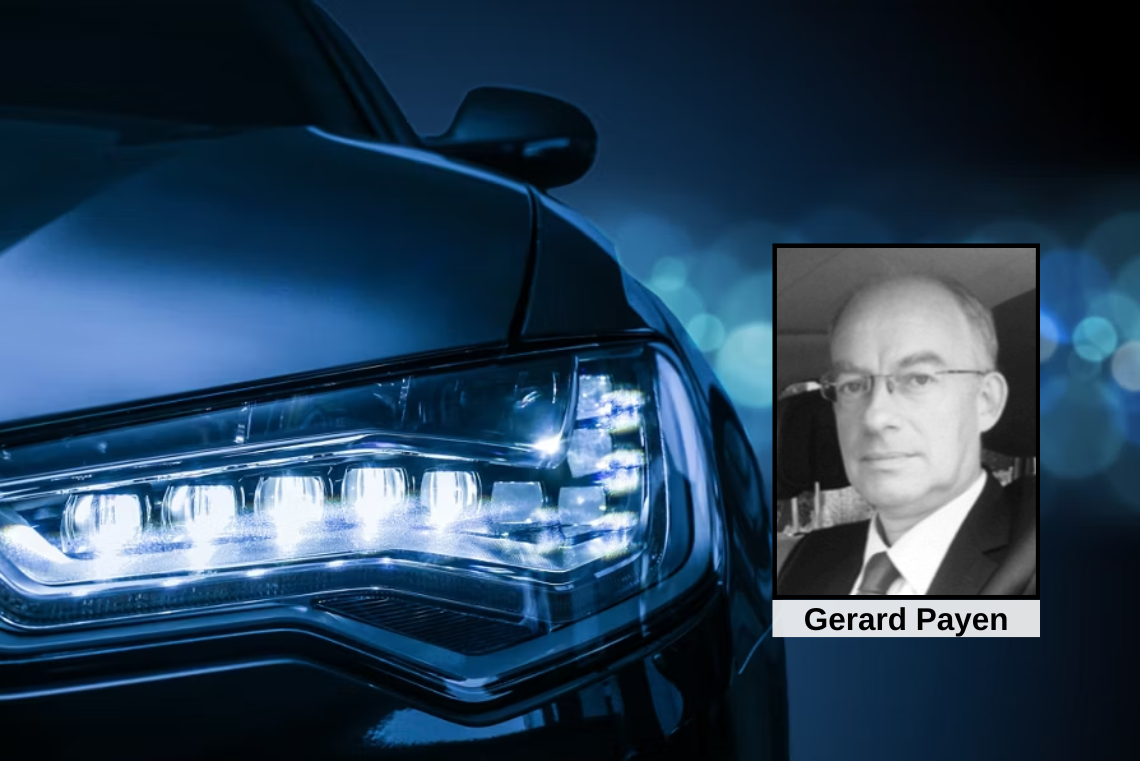
By: Gerard Payen, CDI Global Automotive Industry Group leader
Author:
Managing Partner
Published:
3rd March 2026
Format:
Subject:
Industry:
Share:


