The Evolution of AI in M&A: Augmenting Human Expertise, Not Replacing It
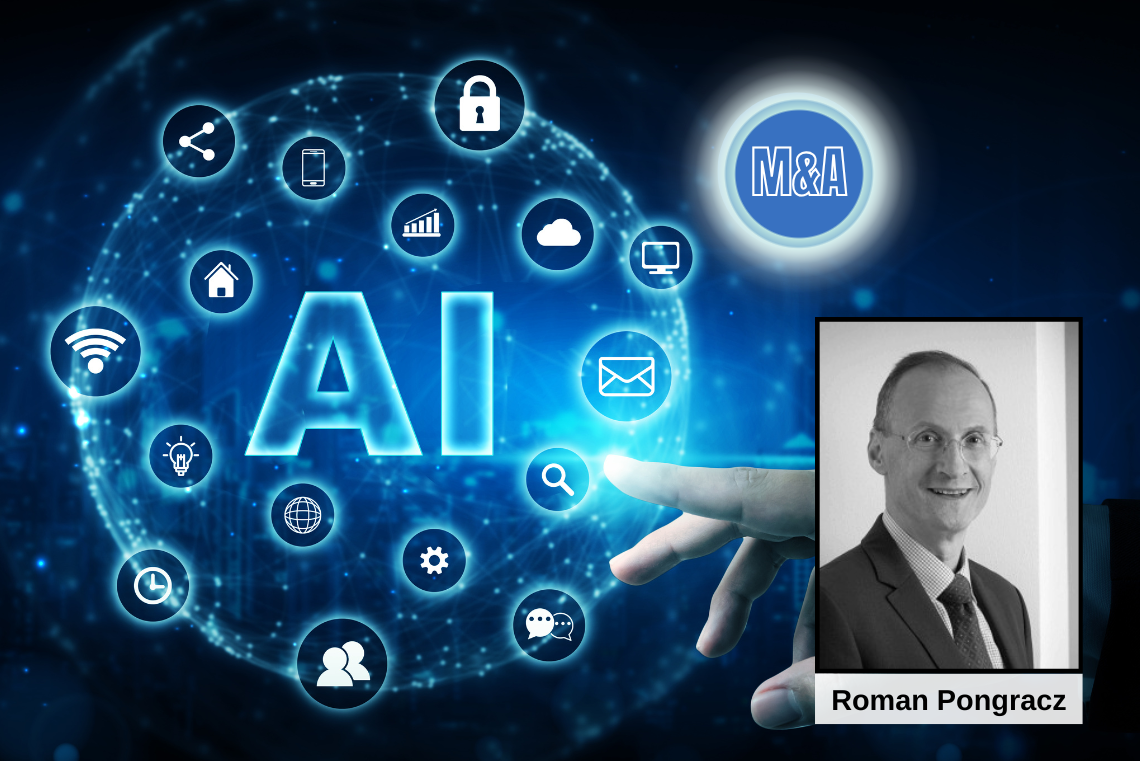
In the constantly evolving landscape of mergers and acquisitions (M&A), artificial intelligence (AI) has emerged as a transformative force, promising to revolutionize traditional deal-making processes. While headlines often emphasize AI's potential to disrupt industries and replace human roles, the reality in M&A, specifically in the SME sector is more nuanced. AI is indeed reshaping the industry, but primarily as an enhancer of human capabilities rather than a replacement for the deeply human elements that make transactions successful.
AI presents an opportunity to address some of the most persistent challenges faced by M&A professionals: information overload, time constraints, and the need for comprehensive analysis across diverse data points. However, the intrinsic personal and emotional element, when it comes to the decisions of the owners, the tightknit connection between business and family, the tradition and values, the feeling of responsibility for workers, for clients and for the next generation of the family, all of these factors and many more need humans, experienced professionals and the subtle feeling for when to talk and to whom, when and to whom to listen and when to stay quiet and wait for a better moment.
Therefore, in M&A, AI should be considered a powerful set of tools that enhance human capabilities rather than replace them. AI technologies excel at handling structured data, identifying patterns, and processing vast amounts of information at speeds impossible for humans; already now the greatest contributions come in data-intensive phases like due diligence and target identification. However, AI lacks the intuition, emotional intelligence, and contextual understanding that human advisors bring to transactions; human expertise – including industrial or strategic intelligence - and the understanding of cultural aspects remain paramount in selecting the right path, in negotiating a deal and managing the relation between the stakeholders such that a transaction becomes a success.
One of the most visible impacts of AI in the M&A landscape has been the development of specialized platforms designed to streamline various aspects of the deal process. These platforms leverage AI to provide enhanced capabilities in areas like deal sourcing, due diligence, and document analysis. But again; for smaller firms and specifically those led by the founder or managed by shareholders themselves, a tailored approach supported by professionals that really care about the people involved is a prerequisite for a satisfactory process and a successful transaction.
Virtual data rooms with advanced document analysis capabilities, deal sourcing platforms that use AI to identify potential acquisition targets, due diligence platforms that can automatically flag potential issues in contracts and financial statements are all designed to make M&A processes more efficient by automating routine tasks and providing deeper insights through advanced analytics. However, they are best understood as enhancing tools rather than replacements for tailored M&A processes and face limitations when it comes to the task of unifying the various and complex realities in an M&A process.
Such limitations include M&A deals which often present unique scenarios that haven't been encountered before. AI systems trained on historical data may struggle with truly novel situations that don't match their training data. Successful M&A often requires comfort with ambiguity and incomplete information, while AI systems typically require clear parameters and complete data sets to function effectively. An AI platform might efficiently identify potential targets based on industry data, technologies, financial metrics, business models, etc., but it would likely miss critical factors like cultural fit, key personnel relationships, and unwritten knowledge that could determine the acquisition's success.
Establishing initial contact and building relationships with potential targets still requires human interaction and emotional intelligence. Also understanding the deeper strategic rationale for potential combinations that might not be evident from data alone.
The most effective application of AI in M&A emerges as a hybrid approach, where AI-powered platforms enhance rather than replace tailored human processes. This typically takes the form of:
- Initial AI-Powered Analysis: Using AI to conduct preliminary screening, data organization, and pattern identification
- Human Interpretation and Strategy: Having experienced professional advisors interpret AI findings, adjust or complement them, and develop strategic approaches
- AI-Assisted Execution: Leveraging AI tools to support execution while maintaining human oversight
- Human Relationship: Relationship-building and the art of negotiation will firmly remain in the human domain
This hybrid approach recognizes that while AI can dramatically improve efficiency in certain aspects of the process, the most successful M&A outcomes still require the nuanced judgment and interpersonal skills that only humans can provide.
While AI is clearly transforming many aspects of the M&A process, it's equally important to recognize the elements of successful transactions that remain firmly in the human domain. These human factors often determine whether a deal succeeds or fails in the long term. M&A transactions are not merely financial or legal exercises—they involve real people with complex emotions, as mentioned before; this is especially true for founders, family businesses, or long-term owners contemplating the sale of their company. The emotional aspects of deals require human qualities that AI cannot replicate; these include establishing the trust necessary for open communication during negotiations and due diligence, the empathy of understanding and addressing the emotional concerns of owners, managers, and employees and experience in navigating the inevitable tensions and disagreements that arise during complex negotiations.
As one experienced M&A advisor put it: "I've never seen a deal fall apart because we couldn't process the data fast enough. I've seen many deals fail because we couldn't bridge the emotional gap between the parties."
The most productive vision of AI in M&A is not as a replacement for human expertise but as an amplifier of human capabilities. Therefore the future of M&A belongs neither to pure AI systems nor to traditional human-only approaches, but to "augmented expertise"—the powerful combination of AI's analytical capabilities with human judgment, creativity, and emotional intelligence. This augmented approach promises to deliver more consistent, insightful, and efficient M&A processes while preserving the deeply human elements that ultimately determine whether deals succeed or fail. For M&A professionals, the imperative is clear: embrace AI as a powerful tool to enhance capabilities and in parallel continue to develop and value the uniquely human skills—strategic thinking, emotional intelligence, creative problem-solving, and relationship building—that remain at the heart of successful transactions. And let us not forget that after a transaction was concluded, it is people that need to achieve the next level or performance and thus realize the additional value that was originally the driver and target for a business combination.
At CDI Global, we take pride in offering a unique and powerful combination of deep industry expertise and 50+ year M&A experience, thanks to our partners and experts in 35 countries, not forgetting an adequate support from AI technologies.
By Roman Pongracz, Partner, CDI Global Austria
Author:
Managing Partner
Published:
19th May 2025
Format:
Subject:
Industry:
Share:


