Ali Kettani: “An optimistic outlook for M&A in Morocco!”
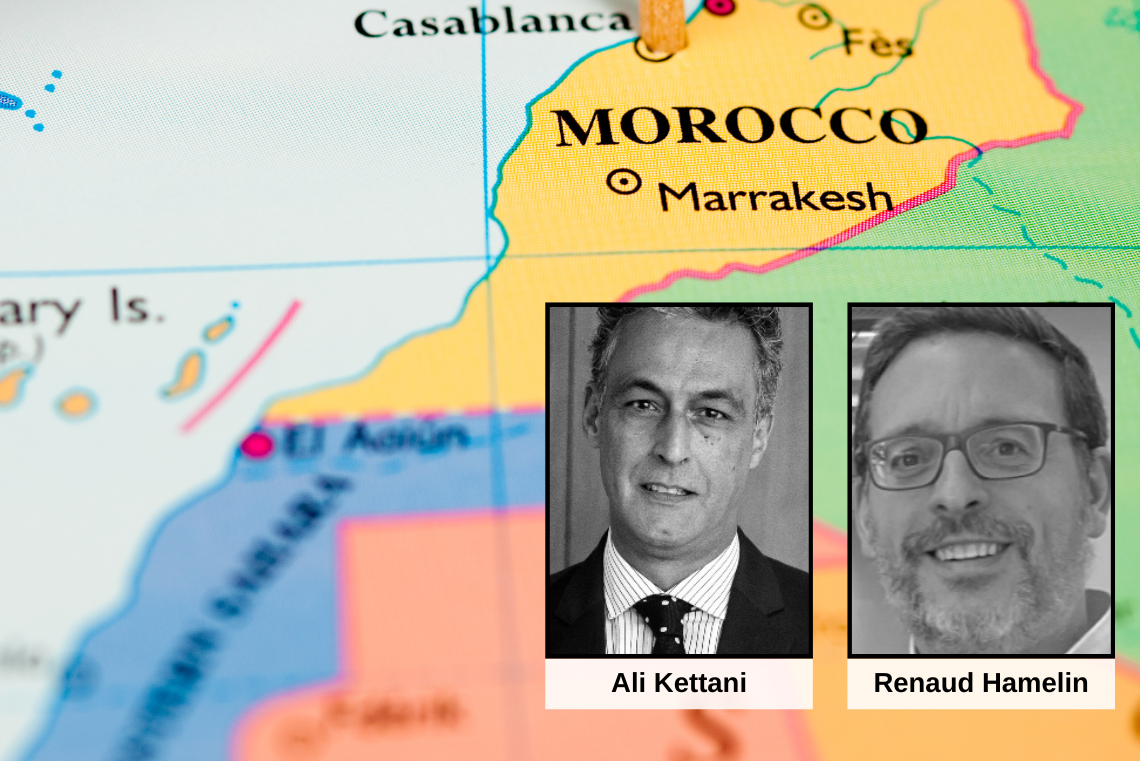
Ali Kettani is the founding partner of the consulting firm Athena Africa Partners headquartered in Casablanca, Morocco and a member of CDI Global specializing in mergers and acquisitions in Morocco and Africa.
Ali was interviewed in March 2025 by Renaud Hamelin, a partner with CDI Global France.
Ali, could you tell us in a few words what are Morocco's economic assets
Morocco is a 38 Million people country, with a fast-growing (ca 11% GDP CAGR over the last 10 years) and macro-economically sound economy which is based on several key pillars:
Agriculture: It plays a key role, especially in rural areas. However, this sector remains vulnerable to climate change, such as droughts, which often affect production as seen in 2024.
Tourism: This sector is very dynamic, attracting millions of visitors from all over the world every year, around 16 in 2024, a record. It has bounced back from the COVID-19 pandemic, helping to revive the economy.
Industry and related sectors: In particular automotive, aeronautics, agro-industry, construction, consumer goods, distribution/logistics, and the historical textile sector.
"Near-shore" services: BPO, customer relations, remote IT.
Morocco has become a hub for exports, thanks in particular to its strategic position close to Europe.
Finally, the Moroccan financial sector (banking and insurance) is robust, and has also been deployed in some twenty African countries over the past twenty years.
Can you give us an idea of what the agricultural sector represents in the Moroccan economy?
Agriculture accounts for 10.7% of Morocco's GDP and employs about 35% of the active population in 3 main segments:
Cereals: Forecast production for 2023-2024 is estimated at 31.2 million quintals, down 43% compared to 2022-2023 (55.1 million quintals). This includes 17.5 million quintals of soft wheat, 7.1 million of durum wheat and 6.6 million of barley.
Tomatoes: Exports reached 700,000 tons, generating more than one billion euros, confirming their key role in agricultural exports.
Vegetable and tree crops: Despite the difficult climatic conditions, about 5.6 million tons of vegetables (tomatoes, potatoes, onions) were produced to meet national demand.
Morocco is often considered to be the “phosphate country”. Could you tell us why?
Morocco holds about 70% of the world's phosphate reserves, which is an essential resource for agriculture. The sector is a major source of foreign exchange, accounting for nearly 25% of the country's total exports. OCP, Office Chérifien des Phosphates, is a world leader in the sector, particularly in their application in fertilizers. OCP Group is a real economic locomotive, focused for several years on innovation and sustainability.
I can illustrate this with some recent figures on the phosphate industry:
1. Production: Morocco is the world's second largest producer of phosphates with about 35 million tons produced in 2023, powering global agriculture but also the nascent electric vehicle battery industry.
2. Exports: In the first half of 2024, phosphate rock exports increased by 31.5% in value and 76.6% in volume, reflecting strong international demand. Derivatives such as fertilizers increased by 5.2% in value and 22.1% in volume.
3. Revenue: OCP Group achieved a turnover of more than 69 billion dirhams (about 7 billion USD) for the first three quarters of 2024, a result higher than the previous year.
We regularly talk about the significant establishment of players in the automotive world in Morocco.
Yes, this is indeed the case, the automotive sector has become Morocco's leading export sector, overtaking phosphates, and has become a production hub for Europe and Africa. Major global manufacturers such as Renault Group and Stellantis have set up large factories in areas such as Tangier and Kenitra respectively over the past ten years and Morocco has become the leader of African countries for volumes of passenger cars produced, ahead of South Africa.
Asian players are also increasingly present with large-scale projects, particularly in the battery and electric vehicle segments. The growing presence of manufacturers has stimulated the arrival of their equipment suppliers, as well as the development of Moroccan SMEs. Thus, we now have a local integration rate of over 69%, with a target of 80% by 2030.
Morocco has significant natural resources, are there investments in renewable energies?
Absolutely! Morocco is investing heavily in renewable energy, such as solar and wind, to reduce its dependence on imported oil and gas. The energy mix was made up of 45% renewable energy in 2024, to reach 52% in 2027, a priority national objective.
What is Morocco doing to become even more attractive to investors?
It is important to note that Morocco is making many efforts to:
- Diversify economically: New industrial sectors are helping Morocco reduce its dependence on agriculture, which remains vulnerable to climate hazards, through the development of new technological and economic ecosystems.
- Attract foreign investment: The development policies of the industrial sector make Morocco an attractive destination for investors, strengthening its competitiveness on the international level.
- Play a regional strategic role: Morocco is becoming a key economic player in Africa through the export of technologies, industrial products and know-how.
- The recent upheavals in world trade between Asia and the West should allow Morocco to benefit from its proximity to Europe and its agreements with the USA to offer a good alternative in terms of industry. The country is making many efforts in this regard in its areas of competence, and is investing in innovation to this end.
Ali, what do you think are the major assets of the Moroccan economy?
I will mention 4 of them:
- A skilled and affordable workforce.
- A strategic location close to European markets: with its ports such as Tangier Med, Morocco is ideally positioned to export to markets in Europe, Africa and beyond...
- Many free zones offering tax advantages.
- An appropriate and constantly improving legislative, regulatory and fiscal framework: this is key to have Morocco become a real business platform on the Europe-Africa-Middle East-America crossroads, both for investment and for business management (no constraints on capital held by foreigners for example)
And which challenges?
I am thinking of 4 major challenges for Morocco:
- Education/Training: Although a lot of efforts are being made, there is still a lot of improvement to be made in these areas, particularly in Technology and Health
- Unemployment: Even though Morocco is experiencing sustained economic growth, finding a job remains difficult, especially for young people.
- Social inequalities: There remains a significant difference between urban (urban) and rural areas, with challenges for access to education and health.
- The fluidity of financial flows: Exchange controls remain an obstacle to the free movement of capital, even if in the case of international operators this is facilitated (import/export, dividend payments, proceeds from disposals, etc.)
What are the future prospects for Morocco?
In recent years, Morocco has been focusing on several development lines:
- Digitalization: Encouraging digital entrepreneurship and developing start-ups.
- Education and Training: Improving the skills of young people so that they are better prepared for the labor market.
- Infrastructure projects: Such as roads, ports (Tangier Med is a major example) and trains (the Al Boraq high-speed train, the Moroccan TGV inaugurated in 2018, is the first in Africa).
- The accelerated industrialization of the country
Could you introduce us to the M&A market in Morocco?
It is not yet easy to find information on transactions and the amounts of operations here, but we can cite the elements given by the latest report of the Competition Council: mergers and acquisitions (M&A) activity in 2023 reached a total value of transactions climbing to nearly 1.96 trillion dirhams ($200 million).
Like most southern European countries, the economic landscape is mainly made up of undercapitalized SMEs. The banking system still relies too much on the demand for real guarantees. As a result, there is significant potential for alternative financing such as growth capital. In addition, Moroccan mid-sized companies are looking for more know-how and access to new markets, mainly in sub-Saharan Africa, Southern Europe and the Middle East. We therefore think that the winning strategy for European players interested in Africa would be to come and make acquisitions in Morocco. This opens up a wide range of M&A action. Finally, a new trend is clearly emerging: South-North acquisitions by large Moroccan groups wishing to establish themselves in Europe.
CDI Global is an ideal tool to channel these various types of interest, by relying on the approach that has made us successful for more than 50 years worldwide, on our presence on all continents, and on our local presence in Morocco through Athena Africa Partners which ensures easy and efficient local navigation for all stakeholders.
Thank you Ali, could you share, as a conclusion, your vision of the future?
I would say that Morocco is moving forward with solid assets and challenges to overcome, and it is building a modern economy, while trying to reduce its vulnerabilities. Clearly, Morocco -its companies, its authorities and its financial ecosystem- is opening up to the world!
Published:
16th June 2025
Format:
Subject:
Industry:
Share:


